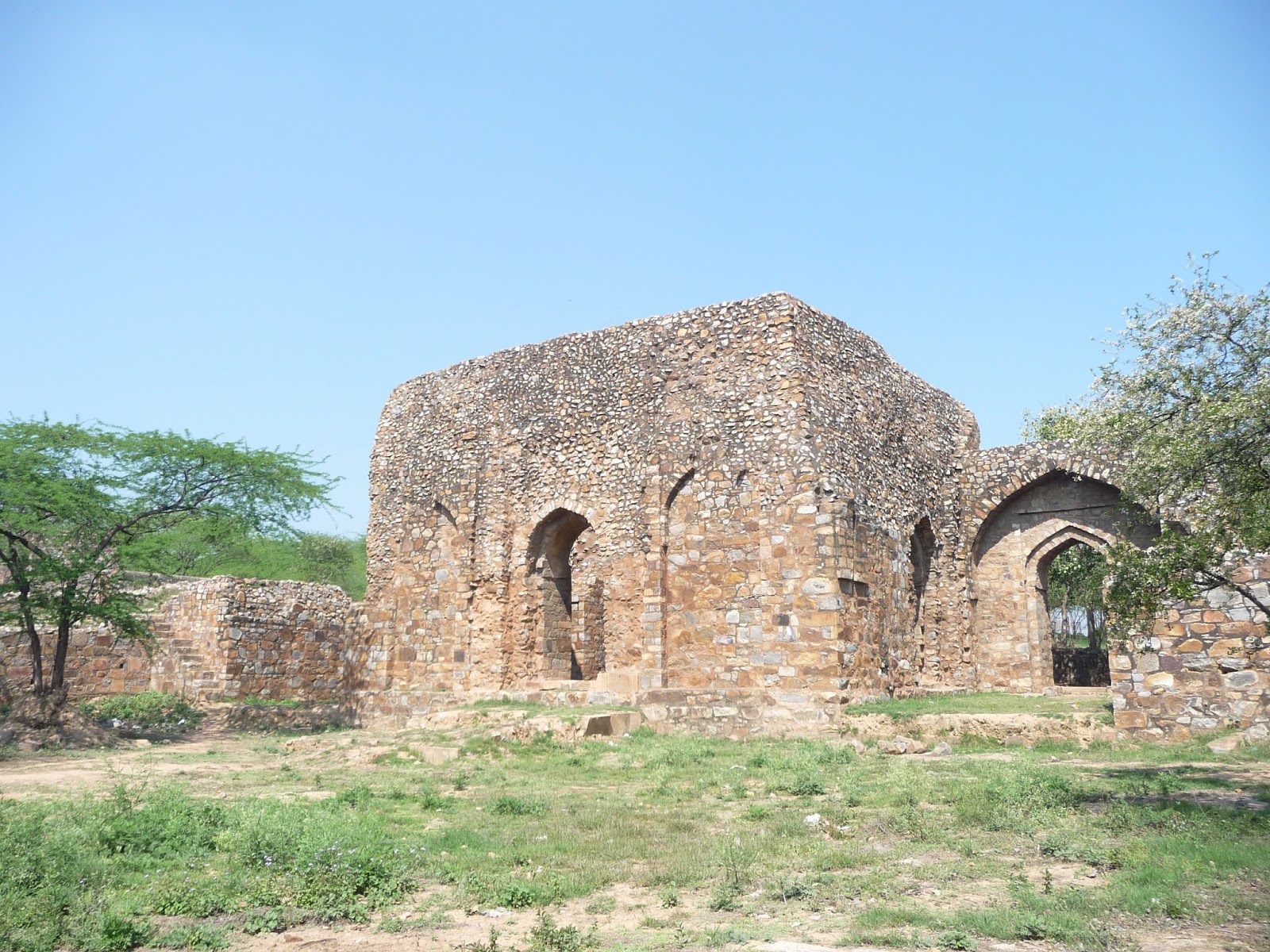
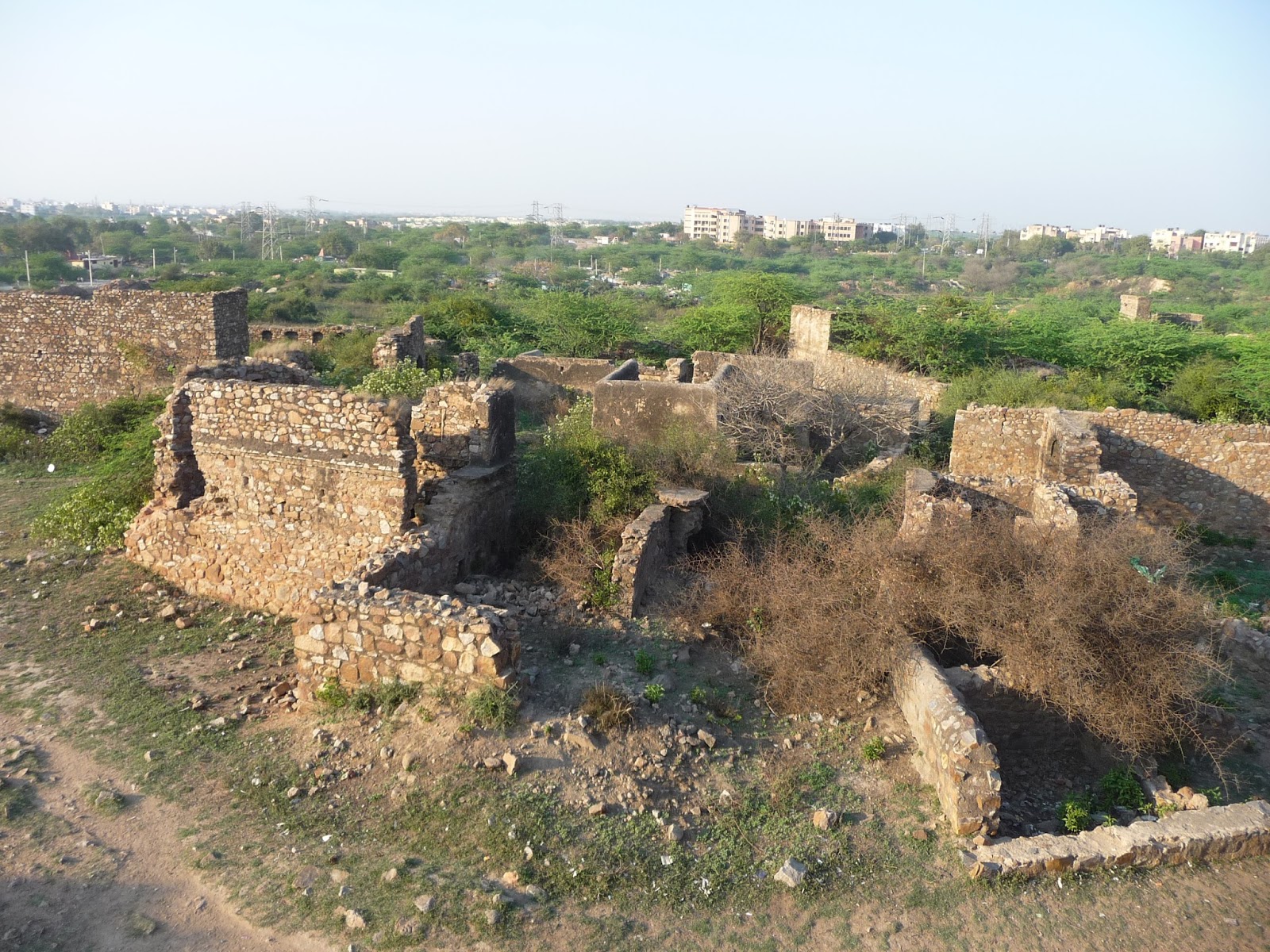
Sultan Ghari Tomb is located at Malakapur Village near Vasant Kunj in Delhi which is near the Qutub Minar Complex.
 |
| Signboard on the road leading to Masjid Sultan Ghari |
Sultan Ghari Tomb was the first Islamic Tomb built by Iitumish in 1231 AD for his son Prince Nasiru'd-Din-Mahmud. Iitumish was the third sultan of the Slave Dynasty who ruled Delhi between 1210 AD to 1236 AD.
A muddy road leads one to the Sultan Ghari Tomb.
 |
| Sultan Ghari entrance and fortification |
First thoughts: Looking at the structure, I thought it was a fort, with the tomb situated within it. I saw a couple of vendors sitting outside it selling flowers and articles of worship. The tomb is visited by both Hindu and Muslim devotees from around Delhi. Rohan told me that on Thursday it , is full house here.
 |
| Chhatri outside Sultan Ghari Tomb |
A series of steps leads to the entrance of the premises, it had four bastion like structure around it with large windows in the walls. The walls were made of sandstone, common material used for building most of the historical structures around Delhi.
 |
| Sultan Ghari Tomb |
We entered the fortification via the door and walked inside barefeet. A octagonal structure lied in the middle of the walls. There were people sitting next to the fortification walls.Maybe they had come to offer prayers. But where is the tomb? was the question I had in my mind.
 |
| Ruins outside Sultan Ghari |
Rohan and I walked all around the octagonal structure and finally I located a small door, from the door a series of winding steps leads one to the tomb. The steps are so narrow that only one person can travel at a time. Reminded me of the steps at Sindhudurg Fort in Malvan. The steps narrow steps had made it impossible for me to get down from the fort walls.
 |
| Stairs leading to the tomb |
There are a couple of tombs here. The one covered in white sheet is the tomb of Nasiru'd-Din-Mahmud. There are candles lit all around it and people praying near it. We stood still for a moment here and then decided to see around. A couple of pillars hold the tomb top from the inside. Taking photos is a bit difficult here due to low lightning. But I still managed to get a couple of shots without turning on the flash and gathering attention.
 |
| Sultan Ghari Tomb |
I couldn't stand there for much longer , as I was finding it difficult to breathe and hence rushed to the surface. Rohan joined me up in a couple of minutes.
 |
| People queuing up to go in the Tomb premises |
We then decided to walk on the walls surrounding the tomb to get a better view of the place. There are a couple of ruins located outside the Tomb premises. There is also the Chhatri of Iitumish son located outside the tomb premises.
 |
| Islamic verses in Sultan Ghari |
The dome placed on the four bastion like structure had a unique and different shape, something which I had never on the other historical structures around Delhi.
 |
| More Ruins outside Sultan Ghari |
We then headed out of the tomb premises as it was almost sunset.